The Kisan Urja Suraksha evam Utthaan Mahabhiyan (KUSUM) project is a transformative initiative aimed at empowering farmers in India through the adoption of solar energy. By providing financial support and promoting renewable energy, KUSUM presents multiple long-term benefits for farmers and farmer groups. Here’s a detailed exploration of these advantages.
Financial Benefits
1. Reduced Electricity Costs
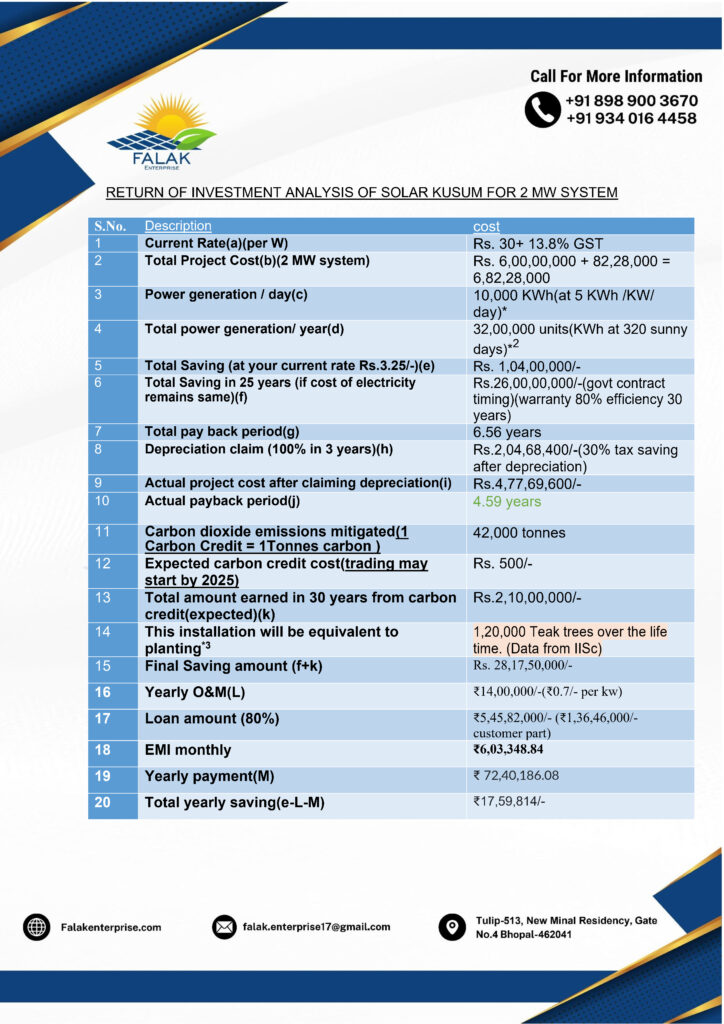
Farmers often face high electricity bills, especially during peak irrigation seasons. The KUSUM project allows them to generate their own electricity through solar panels, significantly reducing their reliance on grid power. For instance, a 2 MW solar installation can save farmers approximately ₹1.04 crore annually on electricity costs, potentially amounting to ₹26 crore over 25 years if electricity prices remain stable
.2. Attractive Return on Investment
The initial investment in solar infrastructure may seem daunting, but the payback period is relatively short. With a payback period of about 4.59 years after tax benefits and depreciation claims, farmers can expect substantial savings thereafter
. This financial model encourages more farmers to invest in solar technology.3. Carbon Credit Opportunities
The KUSUM project also opens avenues for carbon credit trading, which is expected to commence by 2025. Farmers can earn additional income through carbon credits, estimated at around ₹2.1 crore over 30 years from a single installation
. This not only enhances their income but also contributes to environmental sustainability.
Environmental Benefits
4. Sustainable Farming Practices
By utilizing solar energy, farmers can reduce their carbon footprint significantly—up to 42,000 tonnes of CO2 emissions can be mitigated over the lifetime of a solar installation
. This shift towards renewable energy aligns with global sustainability goals and promotes eco-friendly farming practices.5. Afforestation Equivalent
The environmental impact of adopting solar technology is comparable to planting approximately 120,000 teak trees over the system’s lifespan
. This highlights the dual benefit of enhancing agricultural productivity while contributing positively to the environment.
Technological Advancements
6. Increased Reliability of Power Supply
Solar installations under the KUSUM scheme provide farmers with a reliable source of energy for irrigation and other agricultural needs, reducing dependency on erratic grid supply. This reliability ensures that farmers can plan their agricultural activities more effectively.7. Modernization of Farming Techniques
The integration of solar power encourages farmers to adopt modern farming techniques and technologies, such as automated irrigation systems and other energy-efficient tools. This modernization leads to increased productivity and better crop yields.
Community Benefits
8. Empowerment of Farmer Groups
KUSUM promotes collective ownership among farmer groups, enabling them to pool resources for larger solar projects. This cooperative model not only reduces individual costs but also fosters a sense of community and shared responsibility towards sustainable practices.9. Job Creation
The implementation of solar projects creates job opportunities in installation, maintenance, and operation of solar systems. This contributes to local economies and provides employment for skilled workers in rural areas.
Conclusion
The KUSUM project stands as a beacon of hope for Indian farmers, offering numerous long-term benefits that extend beyond mere financial savings. By embracing solar energy, farmers can achieve greater economic stability, enhance environmental sustainability, and modernize their farming practices. As this initiative continues to unfold, it has the potential to revolutionize agriculture in India, making it more resilient and sustainable for future generations.